
Banksy: The Anonymous Artist Who Changed the World
During a recent trip to Paris, I had the opportunity to visit the Banksy Museum, located in the heart of the Montmartre, one of my favourite arrondissments. As someone who spends much of his life immersed in beauty, design, and the creation of memorable experiences, I found myself captivated by an artist whose work often appears on crumbling walls, abandoned buildings, and public streets rather than inside traditional galleries.
Yet that is precisely what makes Banksy so important.
Banksy has become one of the most influential artists of the 21st century. His art challenges governments, corporations, social norms, and even the art world itself. More remarkably, he has managed to become one of the most famous artists alive while remaining almost entirely anonymous. His story is not simply about graffiti—it is about power, protest, identity, and the ability of art to reach ordinary people where they live.

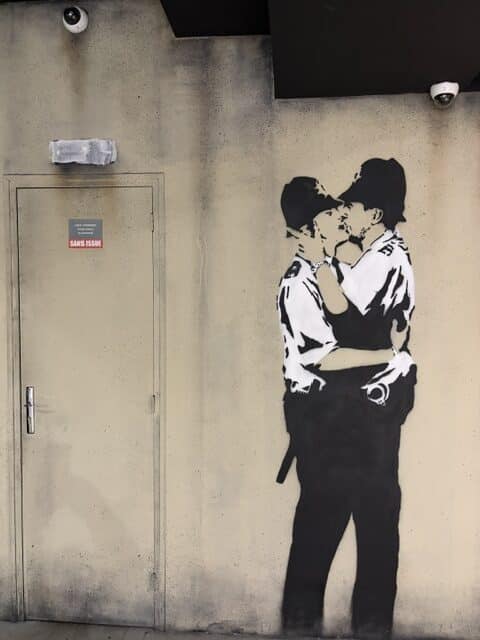
Who Is Banksy?
That is perhaps the most famous question in contemporary art.
Banksy emerged from the street art scene of Bristol, England, during the 1990s. His distinctive stencil style allowed him to work quickly and avoid detection while creating highly detailed and instantly recognizable images. Unlike many graffiti artists who focused primarily on lettering or tags, Banksy used visual storytelling, humour, and satire to communicate political and social messages.
For decades, his true identity remained one of the art world’s great mysteries. Various theories have circulated, and in recent years investigations have pointed toward a man named Robin Gunningham from Bristol. However, Banksy himself has never publicly confirmed his identity, and part of his enduring appeal lies in the mystery that surrounds him.
Ironically, in a world obsessed with celebrity, personal branding, and social media followers, Banksy became famous by refusing to participate in any of it. The anonymity is not simply a gimmick.
Because much of his work began as illegal street art, remaining anonymous protected him from prosecution. More importantly, it shifted attention away from the artist and toward the message. We are encouraged to focus on what the artwork is saying rather than who created it.


The Mystery of Banksy
Part of what makes Banksy such a fascinating cultural figure is that, despite being one of the most recognizable artists on the planet, nobody knows with absolute certainty who he is.
But getting back to his identity. The most widely accepted theory points to a man named Robin Gunningham, who grew up in Bristol, England, and was active in the city’s graffiti scene during the period when Banksy first emerged. Several investigations have linked Gunningham’s movements and personal connections to locations where Banksy’s earliest works appeared.
Yet despite decades of speculation, no theory has ever been definitively proven, and Banksy himself has never publicly confirmed his identity.
In an era dominated by celebrity culture, social media influencers, and personal branding, Banksy has built a global reputation while remaining largely invisible. There are no official selfies, no red-carpet appearances, and no carefully managed public image. Instead, the focus remains firmly on the work itself and the ideas it communicates.
This anonymity has undoubtedly helped protect him from legal consequences associated with creating unauthorized street art. However, it also serves a deeper purpose. By removing the artist from the spotlight, Banksy forces us to engage directly with the message. We are not asked to admire the personality behind the artwork; we are asked to consider what the artwork is saying.
As I walked through the Banksy Museum, I found myself thinking that the mystery surrounding his identity has become part of the art itself. Every mural, stencil, and installation feels connected to a larger question: does knowing who an artist is matter as much as the ideas they leave behind? Especially, when it’s housed in a city filled with priceless art. The contrast is wonderful.


Why Banksy Matters
Many artists create beautiful images. Banksy creates conversations. His works often address issues such as war, poverty, consumerism, government surveillance, immigration, inequality, environmental destruction, and the abuse of power. Rather than producing art exclusively for collectors or museums, he places these messages directly into public spaces where anyone can encounter them.
One of Banksy’s greatest strengths is his ability to communicate complex political ideas through simple imagery.
A child reaching for a balloon.
A protester throwing flowers instead of a weapon.
A soldier searching a little girl.
Police officers making out.
The images are easy to understand, yet the meanings can be interpreted in countless ways.
That accessibility is one reason Banksy’s work resonates with people who might never otherwise engage with contemporary art. You do not need a university degree in art history to understand what he is trying to say.


Art as Protest
Throughout history, artists have challenged authority. From painters criticizing monarchies to musicians protesting wars, creative expression has often served as a powerful form of resistance. Banksy continues that tradition. Many of his most famous works are openly critical of war and militarism. Others challenge consumer culture and corporate greed. Some expose hypocrisy within governments and institutions. His art often asks uncomfortable questions about who holds power and how that power is exercised.
Rather than delivering a lecture, he uses irony, visual jokes, and unexpected juxtapositions. The viewer smiles first and thinks second. Then humour opens the door, and the message follows.
In an age when political debate often becomes hostile and polarizing, Banksy’s ability to provoke reflection through wit is one of his greatest talents.
The Paradox of Banksy
Perhaps the most fascinating aspect of Banksy’s career is the contradiction at its centre.
He frequently criticizes capitalism, consumer culture, and the commercialization of art. Yet his works sell for millions. Collectors compete to acquire his pieces. Auction houses celebrate his sales. Museums dedicate exhibitions to him. What began as illegal graffiti has become a global cultural phenomenon and a highly valuable commodity.
No moment better illustrates this paradox than the famous auction of Girl with Balloon.
In 2018, moments after the artwork sold at auction, a hidden mechanism inside the frame partially shredded the piece. What appeared to be an act of artistic sabotage instantly became one of the most famous moments in contemporary art history. Rather than reducing its value, the stunt increased it dramatically. The event perfectly captured Banksy’s complicated relationship with the art market. He was mocking the system while simultaneously becoming one of its greatest stars.


Visiting the Banksy Museum in Paris
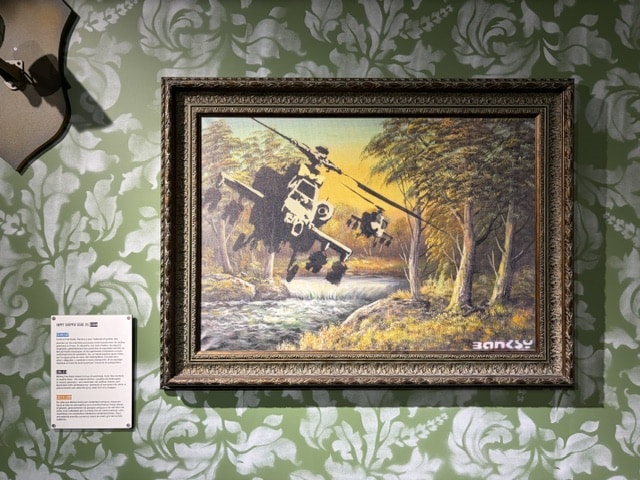
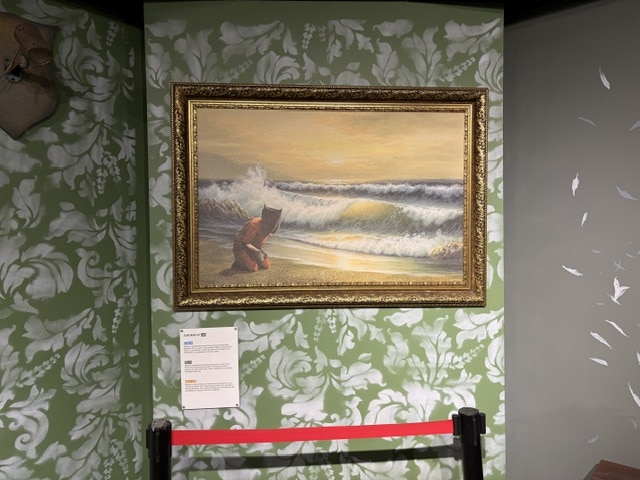
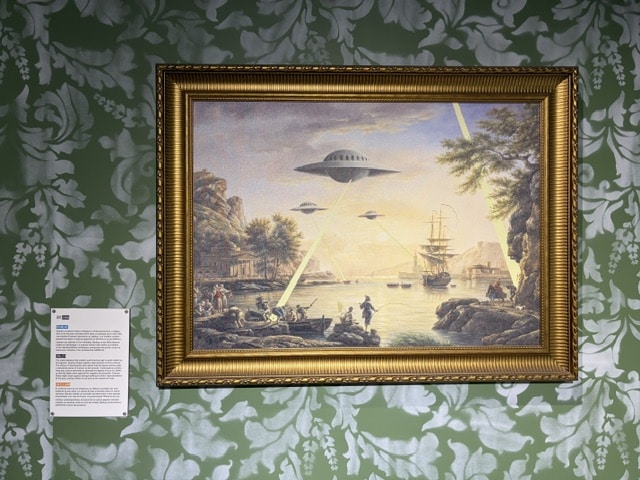
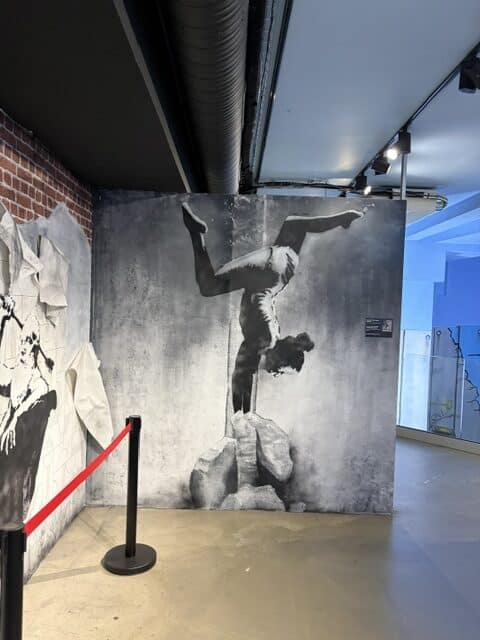
The Banksy Museum is located near the Grands Boulevards, in Montmartre. The exhibition recreates murals and installations at full scale, allowing visitors to experience pieces that are often scattered across cities around the world.
It is important to understand that these are not original Banksy works. Because most of his art exists on public walls and buildings, the museum instead presents carefully recreated versions produced by artists working from the original pieces.
Some art purists may object to that concept.
Personally, I found the experience incredibly worthwhile.
Very few people have the opportunity to travel across Britain, Palestine, France, Ukraine, and numerous other locations where Banksy’s works have appeared. Bringing many of these pieces together under one roof allows visitors to appreciate recurring themes, visual motifs, and the evolution of his artistic voice but understanding where they have been placed in the world is very important to remember when touring this space. Walking through the exhibition felt less like visiting a traditional museum and more like entering a conversation about the modern world.
One room confronted war.
Another explored consumerism.
Another examined surveillance and government control.




Why Banksy Still Resonates Today
More than thirty years after he began creating street art, Banksy’s work remains remarkably relevant. Perhaps that is because many of the issues he addresses have not disappeared. Wars continue. Economic inequality persists. Political polarization has intensified. Questions about surveillance, freedom, migration, and social justice remain central to public debate. Banksy’s images often feel as though they could have been created yesterday or 60 years ago.
The simplicity of his visual language allows his work to transcend borders, cultures, and generations. A teenager in Paris, a tourist in New York, and a pensioner in London can all understand the same image, even if they interpret it differently. That universality is rare. It is one thing to create art that appeals to critics. It is a another thing to create art that speaks to millions.
So check it out, tickets are by reservation only, perhaps you can buy them at the door. It was not crowded when we went around 12noon, when it opens. You can purchase tickets on their website found on their website: Musee Banksy:


As I left the Banksy Museum in Paris, I found myself thinking about how unusual Banksy’s career truly is. He has become one of the most recognizable artists on earth without revealing his face. He has criticized the art market while thriving within it. He has created works that are simultaneously playful and profound. Most importantly, he has reminded us that art does not need to hang inside a grand museum to have meaning.
Sometimes it appears unexpectedly on a street corner, on a wall, or in a forgotten alleyway. Sometimes it makes us laugh. Sometimes it makes us uncomfortable or angry. And sometimes it changes the way we see the world. That, perhaps, is Banksy’s greatest achievement. Not that he became famous. But that he made millions of people stop, look, think, and question the world around them.
Few modern artists can claim to have done the same.
Vivre ma France,


Receive the news in your emailbox
If you like this articles , you can subscribe to our weekly newsletter.